 FR
 EN
Dyeing and printing
Dyeing
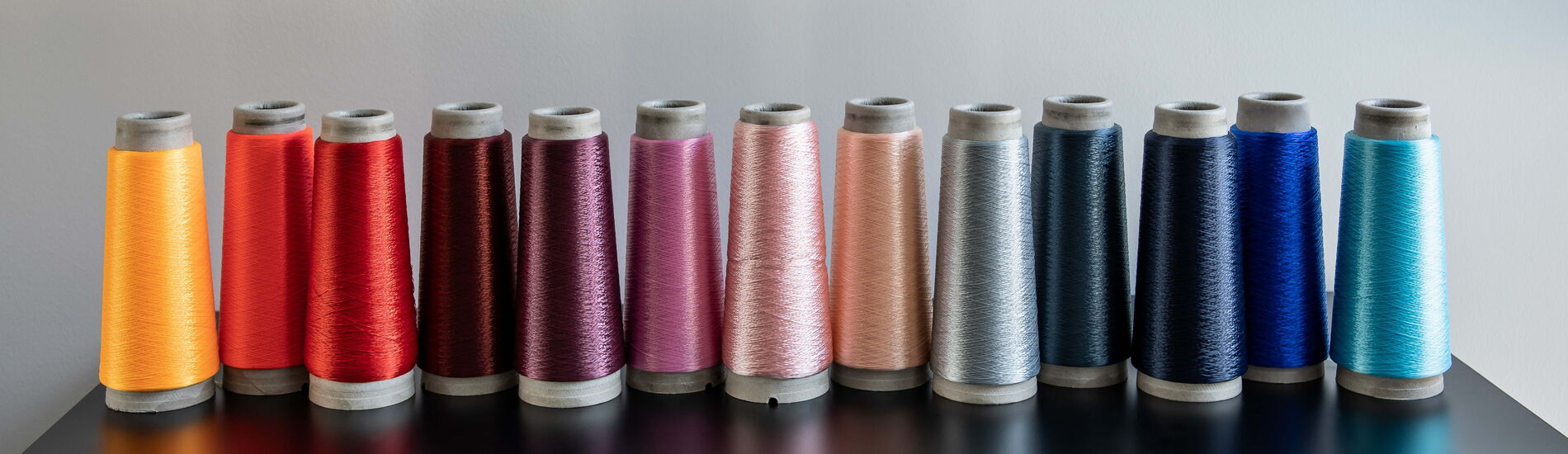
The dyeing of technical yarns is a complex process aimed at uniformly coloring textile fibers while preserving their specific functional properties. This operation is carried out using different methods (dyeing in skeins, in bobbins, continuously) adapted to the nature of the material (synthetic, natural, blended) and the desired color intensity. The choice of dyes (reactive, disperse, acid, basic) depends on the chemical composition of the fibers and the fastness requirements (resistance to washing, light, and chemicals). The process involves preparation stages (wetting, degreasing), dye application under controlled temperature and pH conditions, followed by fixing and rinsing to remove any unfixed dyes. Controlling the thermal parameters, dye concentration, and dyeing auxiliaries ensures uniform and durable coloring, which is essential for technical applications where aesthetics are combined with functional performance.
Printing
Yarn printing is an advanced technique used to apply patterns, color codes, or specific markings to technical yarns through the controlled transfer of dye pastes or specialized inks. This method is mainly carried out using rotary screen printing, screen printing, or digital printing, depending on the complexity of the patterns and production volumes. The process requires careful preparation of the substrates (coating, surface treatment) and the use of inks specifically formulated to adhere to synthetic or natural fibers. Printing techniques can be used to achieve decorative effects (gradients, geometric patterns) or functional effects (identification codes, traceability markings) while maintaining the flexibility and strength of the yarn. Polymerization or heat setting of the inks ensures the durability of the prints in the face of mechanical and environmental stresses encountered during subsequent technical applications.